So, not only am I sick, my computer is currently offline, so this is not going to be a real writing day. Hopefully both of these issues will sort themselves out, but until then, here's a question which, while very simple, is the basis for a lot of very serious play: what do you need that neither power nor money can get you?
In some games this is easy, but it can be a bit tricky with high magic games like D&D, where very little is outside of the reach of a high level character. But it's worth it for one simple reason - it's the only way to bring your past along with you.
That may sound a little enigmatic, but consider the usual arc of a D&D campaign. How many NPCs that were important and relevant to your character at low levels can _possibly_ be relevant to them in the epic tier unless you find things that power and money can't address? Yes, a player can keep those elements in by brute force, choosing to make them stay relevant (with the fear that they may detonate the next time a godling sneezes) but that's unreliable unless there's something a character really needs.
Put another way, no matter how rich or powerful you get, there's always someone who can hurt you. Yes, I know, lone wolf orphans and all that, but that's the way people work. If you can get characters to work that way too, doors will open up, doors that probably merit their own non-sick post.
(One image that has stuck with me throughout this is the 27th level character coming back home for the holidays, and how that gets received. Every family is different, but I can't imagine a scenario where that's _not_ interesting.).
Wednesday, September 22, 2010

Tuesday, September 21, 2010
Essential Impressions
A small, heavy box arrived from Amazon today, containing the kind of distraction that guaranteed I would not be thinking about much of anything else. Inside were the two books for D&D essentials that I've been chomping at the bit to get my hands on.[1] I got the Rules Compendium and the character book, Heroes of the Fallen Lands.
Between these two books I theoretically have everything I need (less dice) to create characters and run adventures. Practically, the monster book would also be necessary to round things out, but I have that pre-ordered, so I won't hold that against them. I did _not_ order the dungeon tile set despite the fact that it's a great deal because I have enough tiles already, and because I ultimately hope to not need them. More on that in a bit.
So, right off the back, these books are a steal. $20, 6x9, 300ish pages, softcover, full color. This is not as flashy as the hardcovers of the 4e line, but it totally highlights the kind of production clout WOTC can bring to bear. If I wanted to produce a book in this format, it would be Black & White interior and I'd be hard pressed to get the cover price under $25. At scale I might be able to hit $20, but with color? Not a chance. Physically, the binding is very good, the paper is nicely dense and heavy, and the cover stock is ok. I will be curious to see how it weathers, but my fear is it's going to curl. One way or another, this is now also a size that can be sold in places that won't tolerate the big RPG book form factor, like department stores, and I doubt that's a coincidence.
Layout-wise it's pretty much exactly what you'd expect if the current 4e layout went one column. Utilitarian with some recycled art[2] - nothing to complain about, but nothing to get too excited about either. All in all, I'm pretty pleased with the physical books, with one caveat - given the density of the books it's a shame they did not take advantage of a full page bleed (which some of the art uses) to have chapter separators which can be seen edge-on, or thumbed through. Maybe a design oversight, maybe cost cutting - dunno which.
Either way, it is a little emblematic of my one worrisome impression of the books. The large size of the PHB may have made for a more expensive book, but it also made for a friendlier one. These books are dense. The data presented combines with the layout, size and weight of the book to be a little more intimidating than I'd expect. I would be intensely curious to find the opinion of someone whose first exposure to 4e is reading this end to end. My existing knowledge makes it too hard for me to truly judge, but it seems daunting.[3] That said, this is more of a concern with the Rules Compendium which, while it's nominally for all players, will probably end up being the de facto DM's book. The Heroes book has enough basic rules to probably be a decent point of entry.
All that said, I admit I was far more interested in the Heroes book, looking to examine the promised class changes. I did, and I was generally pleased, but I also came to a conclusion that utterly surprised me. See, this absolutely isn't 4.5...
But I kind of wish it was.
There are great ideas in the book. The new at-will heavy martial classes is part of that, but other cleverness shows up in peculiar places, like more powers designed as free actions with a trigger of success. Stop and think about that for a moment, especially through the lens of missed dailies and similar frustrations - imagine using a power that you can pull the trigger on after you hit rather than before. And that's just one thing; there's more. Skill descriptions include ideas for improvising on the skills. Borderline effects that were previously just text have mostly become power descriptions.
It's clever and interesting. I see this and I kind of wish they really had the freedom to make something newer, to shake off the oddly lingering bits (Armor quality is sort of subtly worked in without mentioning it. The layout is not designed for the kind of level tables the new class presentation uses) and run free with the lessons learned.
Now, the fact that it's not 4.5 is a smart business move. the fact that you can treat all this stuff as optional rules for your 4E game (or vice versa) is actually quite brilliant, and perhaps necessary given the open questions regarding WOTC's future publishing plans. Keeping their options open is pretty sharp.[4]
All of this falls short of the real question: Will I run it?[5] and the real answer to that is; I don't know yet.
1 - I could technically have gotten them sooner if I'd gone to an actual store, but I cheaped out and went Amazon. Yes, I know, I could have chosen to support a local shop, and usually I try to, but I'm viewing this as more of an experiment than a real purpose, at least initially.
2 - While Essentials makes heavier use of recycled art, Heroes of the Fallen Lands seems to mostly be new stuff.
3 - The assumption may be that someone comes to this after they've played to read the Red Box. I'm sure that will often be the case, but it's daunting all the same.
4 - It'll be doubly interesting to see if they decide to expand the GSL to include this new stuff, of if that's just going to wither on the vine.
5 - Because of course I'd _play_ it if someone else were to run it.
Between these two books I theoretically have everything I need (less dice) to create characters and run adventures. Practically, the monster book would also be necessary to round things out, but I have that pre-ordered, so I won't hold that against them. I did _not_ order the dungeon tile set despite the fact that it's a great deal because I have enough tiles already, and because I ultimately hope to not need them. More on that in a bit.
So, right off the back, these books are a steal. $20, 6x9, 300ish pages, softcover, full color. This is not as flashy as the hardcovers of the 4e line, but it totally highlights the kind of production clout WOTC can bring to bear. If I wanted to produce a book in this format, it would be Black & White interior and I'd be hard pressed to get the cover price under $25. At scale I might be able to hit $20, but with color? Not a chance. Physically, the binding is very good, the paper is nicely dense and heavy, and the cover stock is ok. I will be curious to see how it weathers, but my fear is it's going to curl. One way or another, this is now also a size that can be sold in places that won't tolerate the big RPG book form factor, like department stores, and I doubt that's a coincidence.
Layout-wise it's pretty much exactly what you'd expect if the current 4e layout went one column. Utilitarian with some recycled art[2] - nothing to complain about, but nothing to get too excited about either. All in all, I'm pretty pleased with the physical books, with one caveat - given the density of the books it's a shame they did not take advantage of a full page bleed (which some of the art uses) to have chapter separators which can be seen edge-on, or thumbed through. Maybe a design oversight, maybe cost cutting - dunno which.
Either way, it is a little emblematic of my one worrisome impression of the books. The large size of the PHB may have made for a more expensive book, but it also made for a friendlier one. These books are dense. The data presented combines with the layout, size and weight of the book to be a little more intimidating than I'd expect. I would be intensely curious to find the opinion of someone whose first exposure to 4e is reading this end to end. My existing knowledge makes it too hard for me to truly judge, but it seems daunting.[3] That said, this is more of a concern with the Rules Compendium which, while it's nominally for all players, will probably end up being the de facto DM's book. The Heroes book has enough basic rules to probably be a decent point of entry.
All that said, I admit I was far more interested in the Heroes book, looking to examine the promised class changes. I did, and I was generally pleased, but I also came to a conclusion that utterly surprised me. See, this absolutely isn't 4.5...
But I kind of wish it was.
There are great ideas in the book. The new at-will heavy martial classes is part of that, but other cleverness shows up in peculiar places, like more powers designed as free actions with a trigger of success. Stop and think about that for a moment, especially through the lens of missed dailies and similar frustrations - imagine using a power that you can pull the trigger on after you hit rather than before. And that's just one thing; there's more. Skill descriptions include ideas for improvising on the skills. Borderline effects that were previously just text have mostly become power descriptions.
It's clever and interesting. I see this and I kind of wish they really had the freedom to make something newer, to shake off the oddly lingering bits (Armor quality is sort of subtly worked in without mentioning it. The layout is not designed for the kind of level tables the new class presentation uses) and run free with the lessons learned.
Now, the fact that it's not 4.5 is a smart business move. the fact that you can treat all this stuff as optional rules for your 4E game (or vice versa) is actually quite brilliant, and perhaps necessary given the open questions regarding WOTC's future publishing plans. Keeping their options open is pretty sharp.[4]
All of this falls short of the real question: Will I run it?[5] and the real answer to that is; I don't know yet.
1 - I could technically have gotten them sooner if I'd gone to an actual store, but I cheaped out and went Amazon. Yes, I know, I could have chosen to support a local shop, and usually I try to, but I'm viewing this as more of an experiment than a real purpose, at least initially.
2 - While Essentials makes heavier use of recycled art, Heroes of the Fallen Lands seems to mostly be new stuff.
3 - The assumption may be that someone comes to this after they've played to read the Red Box. I'm sure that will often be the case, but it's daunting all the same.
4 - It'll be doubly interesting to see if they decide to expand the GSL to include this new stuff, of if that's just going to wither on the vine.
5 - Because of course I'd _play_ it if someone else were to run it.
Monday, September 20, 2010
Going Easy On Them
I talk a lot about player hooks and ideas that can be used to draw them into play, such as in A Trick. It's one of the best things you can do to make a game personal. But it doesn't always work as smoothly as one might like. Players are often quite hesitant to come up with hooks for their character.
Now, there area lot of reasons why this might be so. Sometimes it's pure disinterest - as much as we rail against the game as the GM's story, sometimes that's exactly what people are looking for a chance to play in - but more often it's a result of bad experiences. A novice player tends to cheerfully create extraneous detail, but a player with moderate experience might shy away from doing so after a GM has ignored, quashed or profoundly abused the player's creativity.
In such a case, there's a temptation to try to force the player to try just one more time, but that exchange tends to be reminiscent of getting a child to eat vegetable. it might be funny if it weren't for the fact that we're all grown ups - rather than try to force the issue, step back, and consider a different approach.
If your players aren't inclined to produce hooks, then it's time to raise a discussion about a seemingly unrelated issue - group cohesion. As a GM, I spend a lot of time stressing about keeping the group together, but the reality is that this is a task that you can reasonably offload onto a responsible group. Making it explicitly clear to players that keeping the group together is their job is a useful thing to do. It not a matter of putting forward a threat, or framing ti in punitive terms, but rather one of getting player agreement that, as players, they're a team, and no one gets left behind. This may seem complicated, but if your group gets along, it's really just a matter of having the conversation in the first place.[1]
This becomes important once you can rely on the connections between your characters. if those connections are reliable, then it only takes one or two hook laden character as their hooks become, effectively, secondary hooks for the hookless characters. This can be very liberating for those players and allow them to focus on the kind of relationships they're looking for[2] in play.
Often these are straightforward things like friendship and camaraderie. It's very satisfying to have a friend's back or to help a buddy out in a pinch. Many players who are looking for more positive relationships than they trust the GM with can potentially find them within the group, with the "bad" GM stuff providing the fodder for reinforcing those relationships.
Now, I know you hardcore GMs are flinching about this kind of warm and fuzzy stuff, but step back for a second. You're still going to have all the opportunity in the world to throw in nasty stuff, but by putting pressure on the group in the parts that are expecting it, you draw in the other players without them feeling like they're getting yanked in directions they didn't sign up for.
This is one of those cases where a soft response can get you a lot more buy in than a hard one. Forcing players into something they're uncomfortable with "for their own good" is less likely to get the play that you all want then simply making sure the opportunity is there for them, in the form of their friends and companions.
1- If your group doesn't get along, this is probably the least of your problems, but this may at least help them find a way to get along better.
Now, there area lot of reasons why this might be so. Sometimes it's pure disinterest - as much as we rail against the game as the GM's story, sometimes that's exactly what people are looking for a chance to play in - but more often it's a result of bad experiences. A novice player tends to cheerfully create extraneous detail, but a player with moderate experience might shy away from doing so after a GM has ignored, quashed or profoundly abused the player's creativity.
In such a case, there's a temptation to try to force the player to try just one more time, but that exchange tends to be reminiscent of getting a child to eat vegetable. it might be funny if it weren't for the fact that we're all grown ups - rather than try to force the issue, step back, and consider a different approach.
If your players aren't inclined to produce hooks, then it's time to raise a discussion about a seemingly unrelated issue - group cohesion. As a GM, I spend a lot of time stressing about keeping the group together, but the reality is that this is a task that you can reasonably offload onto a responsible group. Making it explicitly clear to players that keeping the group together is their job is a useful thing to do. It not a matter of putting forward a threat, or framing ti in punitive terms, but rather one of getting player agreement that, as players, they're a team, and no one gets left behind. This may seem complicated, but if your group gets along, it's really just a matter of having the conversation in the first place.[1]
This becomes important once you can rely on the connections between your characters. if those connections are reliable, then it only takes one or two hook laden character as their hooks become, effectively, secondary hooks for the hookless characters. This can be very liberating for those players and allow them to focus on the kind of relationships they're looking for[2] in play.
Often these are straightforward things like friendship and camaraderie. It's very satisfying to have a friend's back or to help a buddy out in a pinch. Many players who are looking for more positive relationships than they trust the GM with can potentially find them within the group, with the "bad" GM stuff providing the fodder for reinforcing those relationships.
Now, I know you hardcore GMs are flinching about this kind of warm and fuzzy stuff, but step back for a second. You're still going to have all the opportunity in the world to throw in nasty stuff, but by putting pressure on the group in the parts that are expecting it, you draw in the other players without them feeling like they're getting yanked in directions they didn't sign up for.
This is one of those cases where a soft response can get you a lot more buy in than a hard one. Forcing players into something they're uncomfortable with "for their own good" is less likely to get the play that you all want then simply making sure the opportunity is there for them, in the form of their friends and companions.
1- If your group doesn't get along, this is probably the least of your problems, but this may at least help them find a way to get along better.
Friday, September 17, 2010
Red Box White Noise
So, the new Red Box is out in common distribution now, and D&D essentials is coming down the pike. I have the former and have pre-ordered the latter, and I've been holding off on talking about it too much until I've had a chance to really get my hands dirty with it, but a recent Escapist interview with Mike Mearls has created a bit of a furor.
The conventional wisdom is that Essentials is an acknowledgment that 4e was a mistake in direction for the game. This is usually declared with a smug sense of vindication and a plug for Paizo[1] but I find myself disagreeing with this interpretation. I've been equally willing to discuss the things I like and dislike about 4e, and I think that a lot of interpretations of Essentials are more about people's opinions of 4e than their opinion on Essentials.
Now, first and foremost I think Essentials will fall short of what I would hope for in one big way. I do not anticipate it resulting in any new opening of the 4e system, and that's a terrible shame. 4e is hard for a fan or small publisher to support. The rules for doing so are complicated, and any mechanical elements you may create will be relegated to the ghetto by the online tools. The quality of the tools, which is quite high, creates a barrier to anything that falls outside its bounds.
However, Essentials represents a potential crack in this facade. If essentials characters are sufficiently different from core characters, then the tools might need to be modified to allow for more flexibility. Realistically, I expect they're just make the character builder offer a branching choice (Create standard character or essentials character) but it's nice to hope.
This is important though because it speaks to the other problem I have with D&D - the disconnect between the rules and reality. That is to say, when a power does something mechanical like, say, stun two targets and damage and push a third, it's not always clear what has actually happened in the "reality" of the game to produce that sort of outcome.[2]
This is one of my biggest hurdles in dealing with D&D is this disconnect[3] but what's interesting about it is that it's not essential (if you pardon the pun) to the rules. There are plenty of powers that are easy to visualize, and there's nothing that mandates this confusion, it's just _easier_. If you think of mechanics first and describe a mechanically interesting outcome, it can be hard to reverse engineer a coherent explanation, and there's very little incentive to do so.[4] Easier to just add something vague and handwavey.
This also plays into why it's harder to write martial classes than anything else. The "everyone's a spell caster model" that is kind of implicit in the power system[5] gives other power sources more tools to fake this stuff. For a martial character, there are only so many ways to describe HIT BAD GUY WITH SWORD with the kind of simplicity that goes into other powers. It can be done with a lot more attention to detail (just listen to any fighting enthusiasts nerd out for a sense of how) but not easily.
The bottom line there is that if Essentials opens up the powers system to support more descriptive and "logical" powers, that's a very promising thing, something I'd be very excited to see. But doing it part way won't cut it. With an open system, you can put in most of a good idea and trust in the ecosystem to bring it to maturity. With a merely closed one, you can expect people to find a way around the weaknesses and patch things up. But with a strongly closed system, you're stuck with what you got, for good or ill. This fact has been far more of an anchor around 4e's neck than any failure to be "real D&D".
Because the reality is, 4e _is_ very well designed. It's a fantastic engine and a well thought out game. That doesn't make it perfect, or the best or only game out there, but just as people are complaining about the players 4e left behind, it's important to realize that a lot of people enjoy 4e. Trying to change 4e into something else that won't support them is a losing strategy. But making it into something bigger, something that can make room for old and new players.
Maybe it will be that. Maybe it won't. But I look forward to finding out.[6]
1 - And while I mean no sleight to Paizo - they're awesome - Pathfinder ends up being a blunt instrument that gets misused terribly in these conversations. Pathfinder really is that good, and quite big, but i point out that despite being open and fantastically well designed, it does not invite the same raft of d20 products surrounding it that D&D did. There are many ways in which this is a good thing, but as a yardstick for inspiration it is pretty short.
2 - This is also an issue with things like Daily powers, which I understand Essentials forgoes.(EDIT: Some people have informed me that it's the martial classes -fighters and rogues - who forgo dailies. I actually kind of dig that).
3 - the boundary of which is really the Druid, as lead to some discussion.
4 - I very nearly killed myself with this on the Witch Doctor because I hadn't realized how loosely the color was tied to the mechanics in 4e. I designed those powers as color first, then expressed in mechanics, and in doing so I made much more work for myself than I needed to.
5 - Which is why 4e is really such a fantastic match for Earthdawn.
6 - And if it's not? Well, I'll probably get back on the heartbreaker horse.
The conventional wisdom is that Essentials is an acknowledgment that 4e was a mistake in direction for the game. This is usually declared with a smug sense of vindication and a plug for Paizo[1] but I find myself disagreeing with this interpretation. I've been equally willing to discuss the things I like and dislike about 4e, and I think that a lot of interpretations of Essentials are more about people's opinions of 4e than their opinion on Essentials.
Now, first and foremost I think Essentials will fall short of what I would hope for in one big way. I do not anticipate it resulting in any new opening of the 4e system, and that's a terrible shame. 4e is hard for a fan or small publisher to support. The rules for doing so are complicated, and any mechanical elements you may create will be relegated to the ghetto by the online tools. The quality of the tools, which is quite high, creates a barrier to anything that falls outside its bounds.
However, Essentials represents a potential crack in this facade. If essentials characters are sufficiently different from core characters, then the tools might need to be modified to allow for more flexibility. Realistically, I expect they're just make the character builder offer a branching choice (Create standard character or essentials character) but it's nice to hope.
This is important though because it speaks to the other problem I have with D&D - the disconnect between the rules and reality. That is to say, when a power does something mechanical like, say, stun two targets and damage and push a third, it's not always clear what has actually happened in the "reality" of the game to produce that sort of outcome.[2]
This is one of my biggest hurdles in dealing with D&D is this disconnect[3] but what's interesting about it is that it's not essential (if you pardon the pun) to the rules. There are plenty of powers that are easy to visualize, and there's nothing that mandates this confusion, it's just _easier_. If you think of mechanics first and describe a mechanically interesting outcome, it can be hard to reverse engineer a coherent explanation, and there's very little incentive to do so.[4] Easier to just add something vague and handwavey.
This also plays into why it's harder to write martial classes than anything else. The "everyone's a spell caster model" that is kind of implicit in the power system[5] gives other power sources more tools to fake this stuff. For a martial character, there are only so many ways to describe HIT BAD GUY WITH SWORD with the kind of simplicity that goes into other powers. It can be done with a lot more attention to detail (just listen to any fighting enthusiasts nerd out for a sense of how) but not easily.
The bottom line there is that if Essentials opens up the powers system to support more descriptive and "logical" powers, that's a very promising thing, something I'd be very excited to see. But doing it part way won't cut it. With an open system, you can put in most of a good idea and trust in the ecosystem to bring it to maturity. With a merely closed one, you can expect people to find a way around the weaknesses and patch things up. But with a strongly closed system, you're stuck with what you got, for good or ill. This fact has been far more of an anchor around 4e's neck than any failure to be "real D&D".
Because the reality is, 4e _is_ very well designed. It's a fantastic engine and a well thought out game. That doesn't make it perfect, or the best or only game out there, but just as people are complaining about the players 4e left behind, it's important to realize that a lot of people enjoy 4e. Trying to change 4e into something else that won't support them is a losing strategy. But making it into something bigger, something that can make room for old and new players.
Maybe it will be that. Maybe it won't. But I look forward to finding out.[6]
1 - And while I mean no sleight to Paizo - they're awesome - Pathfinder ends up being a blunt instrument that gets misused terribly in these conversations. Pathfinder really is that good, and quite big, but i point out that despite being open and fantastically well designed, it does not invite the same raft of d20 products surrounding it that D&D did. There are many ways in which this is a good thing, but as a yardstick for inspiration it is pretty short.
2 - This is also an issue with things like Daily powers, which I understand Essentials forgoes.(EDIT: Some people have informed me that it's the martial classes -fighters and rogues - who forgo dailies. I actually kind of dig that).
3 - the boundary of which is really the Druid, as lead to some discussion.
4 - I very nearly killed myself with this on the Witch Doctor because I hadn't realized how loosely the color was tied to the mechanics in 4e. I designed those powers as color first, then expressed in mechanics, and in doing so I made much more work for myself than I needed to.
5 - Which is why 4e is really such a fantastic match for Earthdawn.
6 - And if it's not? Well, I'll probably get back on the heartbreaker horse.
Thursday, September 16, 2010
How to Fail Well
As GMs, we fear failure. Not on our part - we're good with that - but when our players fail. We're well trained to handle success, to roll forward and turn it into play, but a failure can totally jam us up. It's unfun for the player and we're not always sure how to proceed. So with that in mind, here's another how to: How to handle failure.
First, the disclaimer.
So with that out of the way...
The rule of the dice is that when you roll the dice, something should happen. Ideally, you're already ready for both success and failure and you know what to do, but I'm assuming here that you don't. "Something Happens" shouldn't be too hard a test to past, but too often, a failure translates into nothing happens, and that's where things go wrong.
So first and foremost, if you can, make the failure active. Things break, disasters happen, and the manure hits the rotating blades[1]. Things don't just not work, they go wrong, and in going wrong they demand response. It may seem counterintuitive, but the bigger and bolder you get with with the failure, the more your players will embrace it because it will give them things to do.
Now, that's great if you can make it happen, but not every failure is going to offer itself to that sort of outcome. Sometimes the action doesn't suggest a good, fun failure, or sometimes you're just going to draw a blank on how to bring that failure to life. In that case, fall back on this model: A failure is a success with an additional cost.
That is, the character succeeds, but it's not an unalloyed success. The character jumps the chasm but twists his ankle on the landing.[2] The lock gets picked, but not before the guards see you. You search the room, but you damage the clue you find. You find the book you need, but it's in a language you don't know.
Between these two tricks you should have everything you need to handle a poorly timed failure.
1 - This is also an opportunity to respect your players by attributing flukey failure to things external to the character, If you character is good at something, you don't want the dice to tell you that you suck. Rather, if the failure has some external cause (missing information, a broken tool or the like) then the player's expertise is still respected, but things have gone wrong.
2 - This is also a great solution for situations which would traditionally be "Failure equals death" since those failures tend to really suck.
First, the disclaimer.
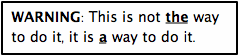
So with that out of the way...
The rule of the dice is that when you roll the dice, something should happen. Ideally, you're already ready for both success and failure and you know what to do, but I'm assuming here that you don't. "Something Happens" shouldn't be too hard a test to past, but too often, a failure translates into nothing happens, and that's where things go wrong.
So first and foremost, if you can, make the failure active. Things break, disasters happen, and the manure hits the rotating blades[1]. Things don't just not work, they go wrong, and in going wrong they demand response. It may seem counterintuitive, but the bigger and bolder you get with with the failure, the more your players will embrace it because it will give them things to do.
Now, that's great if you can make it happen, but not every failure is going to offer itself to that sort of outcome. Sometimes the action doesn't suggest a good, fun failure, or sometimes you're just going to draw a blank on how to bring that failure to life. In that case, fall back on this model: A failure is a success with an additional cost.
That is, the character succeeds, but it's not an unalloyed success. The character jumps the chasm but twists his ankle on the landing.[2] The lock gets picked, but not before the guards see you. You search the room, but you damage the clue you find. You find the book you need, but it's in a language you don't know.
Between these two tricks you should have everything you need to handle a poorly timed failure.
1 - This is also an opportunity to respect your players by attributing flukey failure to things external to the character, If you character is good at something, you don't want the dice to tell you that you suck. Rather, if the failure has some external cause (missing information, a broken tool or the like) then the player's expertise is still respected, but things have gone wrong.
2 - This is also a great solution for situations which would traditionally be "Failure equals death" since those failures tend to really suck.
Wednesday, September 15, 2010
Action vs. Frustration
So, while I was pondering other “GM How To” ideas before yesterday’s massive post, one that stuck out was “How to piss off your players without pissing them off at you.” Curiously, this is a lot easier to explain than how to describe something.
The trick of it is simple: Your players don’t mind you doing terrible things to them. In fact, they expect it. They did not sign up for these games to play boring people doing boring things. Stuff going badly is an essential part of excitement and adventure. A lot of GM’s shy away from pulling out the nastiness because they think their players might be averse to it[1] but that’s a misunderstanding.
What players hate is when something bad happens and they can’t do anything about it.
This is not to say they need to be able to *stop* the badness (though that’s nice) but rather that they need to have some sort of reasonable response available to them. Being capable of responding actually breaks down into a two elements, and things tend to fail when one of these is overlooked.
First, the characters must be able to act effectively. In broad strokes this means that things like inescapable paralysis forcing players to be audience to the badness will be frustrating, but it can also be more subtle. If the players can act, but their actions will do nothing, as in the case of an invulnerable boss, then that’s equally frustrating.[2] One way that this can be gotten around is if the limitations on the players are already part of the scene. Characters will occasionally get captured and put in chains, and there’s a certain expectation of helplessness that comes with that, so if a bad things happens as _part_ of such a scene, it is less offensive than the idea of putting them in chains _solely_ to make them watch the badness. Needless to say, you also need to make sure the situation changes quickly so the players can start acting soon – if you show them the badness then just leave them in chains, that’s a little lame.
Second, the players need to be able to act intelligently. That is, there needs to be a clear line of action for them to pursue. If you create a villain and kick the characters’ teeth in to the point where they really hate him and set off to hunt him down, they need to know which way to go. Even if they don’t catch him (‘He was just here last week, but let in an awful hurry!’) they need to know how to keep going if they want to pursue. Give them enough information to feel they can make reasonable choices.
Enough information is a slightly tricky thing because you don’t want to give _no_ information, but at the same time you don’t want to give so many options that it becomes paralyzing. If the path branches, that’s fine, but when it turns into a starbust, you may have a problem[3]. Similarly, be very careful with trying to play the villain smart enough to try to trick the characters (and players) with false leads. If you do this more than very rarely, all information starts becoming suspect, and the game grinds to a paralytic halt.
So that’s the short of it. Do bad things to the characters, but do them in a way that produces action, not frustration.
1 – And some players will say they’re averse to it, but I’ve found that usually means they’re looking to avoid something more specific than trouble, but they can’t articulate it. Often, this is a result of bad experiences with other games. There’s no one solution to this problem (except, of course, to play respectfully) and it’s something you’ll have to explore with the player, re-establishing trust and finding tastes.
2 – This is a big reason why stealing magic items in D&D is such a hot button topic. It absolutely engages the players by pissing them off intensely, but because a character’s magic items are such a large part of their mechanical effectiveness that the characters end up feeling neutered.
3 – This is, by the way, dangerously close to railroading. The difference is in player motives – if they _want_ to hunt the villain, it’s reasonable to provide a road to him. The catch is that you don’t punish them when they decide to go off the road, or to pursue another road entirely.
Tuesday, September 14, 2010
4 Elements of a Scene
Ok, so let me start with a a qualifier: there's no one way to describe a scene. I'm going to be providing instructions for _a_ way to do so in the hopes that they will be useful to anyone who is looking for some guidelines in stepping away from boxed text. The ultimate goal of such guidelines is to become unnecessary. The upshot of this is that if you have other tricks you want to suggest, please feel free to do so in the comments. This is NOT a comprehensive approach, and more tricks are always useful. Now, with that out of the way...
Let me start without he assumption that you need to describe a scene to your players, and that you need to create this description from whole cloth. You may have boxed text you don't want to read, or you may have a description that you need to paraphrase.[1] The goal is to turn that into a description that actually works for your game.
For your description, you need to provide four things, the FRAME, the THREATS, the OPPORTUNITIES and the DETAILS. If you can cover each of those points quickly and clearly, you'll have a solid description.
The Frame is the first part of any description, and in some ways the most important, as it establishes the baseline. Since you can't describe everything in detail, the frame helps set the tone for the details you don't provide, helping your players fill in the gaps. You should consider it a sketch, and you want to answer these question: What is the approximate size and shape of the space? Is there anything peculiar about the arrangement of the space? Where are the characters within the space?[2]
You should be able to answer those questions in one or two sentences. For example:
You are on a crowded city street that serves as an impromptu bazaar. It's easily forty feet wide, and goes fifty feet in each direction before hitting a cross street.
Old, squat trees press up against the right side of the trail, blocking sight and movement. To the left, the hillside falls away in a steep embankment that offers a lovely view and the potential for an unpleasant drop.
The alley is cramped, narrow enough that you can touch both sides with outstretched arms. The street is right behind you, and about 15 feet in the alley turns left and out of sight.
The door you came through opens into the center of one side of this rectangular room - the side you emerge from is fifty feet wide, and it is perhaps thirty feet across to the opposite wall.
By itself, the frame doesn't tell is much about the scene - specifically, it doesn't tell us why the scene is interesting, and why we're describing this particular scene rather than some other one. That's where THREATS and OPPORTUNITIES come up.
THREATS are usually pretty obvious, and while it might be easy to generalize them as creatures or traps, the real thing about threats is that they demand player action (even if that action is to sneak away quietly). Threats are not generic - simply saying there's a monster in a room doesn't convey the threat because it does not lead to action. Is the monster sleeping? Distracted? Charging at you? Loading a crossbow? What the creature is doing (and how) is as important as what it is. This is why certain information (such as what weapons an enemy has) is part of the threat - it suggests what action the enemy is going to take.
When the threats aren't creatures, the same rules apply - just describing the existence of the threat is not going to tell your players enough. If there's a pendulum blade scything across the room, it's very important to know whether it's scything _towards_ the characters.
Thus, with the threat, you must answer the following questions: What is the threat, what is it doing and (if it's not obvious) what are the consequences of it doing that?[3] For example:
A centaur on the far side of the room startles as you enter, instinctively drawing an arrow from the quiver on his back and scanning you for the optimal target.
The door slams itself shut behind you with a *click* and a small hole, the size of a mans fist appears in the center of the room, though after a few seconds, it has grown to the size of a dinner plater, and is continuing to grow.
Argale waves to you from across the plaza, seemingly oblivious to the men in crimson cloaks approaching him from the opposite side. They're closer to him than you are, and are holding their hands under their cloaks in a way that strongly suggests hidden weapons.
OPPORTUNITIES are the flip side of threats. They are things which players may use, exploit or take advantage of but which do not necessarily have any impetus of their own. They are the things which, if you were to see in a movie, you just _know_ are going to get jumped on, knocked over, blown up, swung from or otherwise used to liven up the scene. As a GM this requires a little bit of thought. Some elements (like neutral "traps") may be a mechanical part of the encounter, but other things may be a little more neutral. As a good rule of thumb, opportunities include anything which it has occurred to you the players might use or interact with in the scene and which you're ready to handle.[4]
Opportunities answer the question "What things might the players use?"
A great iron chandelier hangs from the ceiling, with the winch and chain holding it attached to the far wall.
Heavy tapestries hang from each of the balconies, almost down to the floor.
The ancient statue of Thor up against the wall has seen better days; it's a wonder it's still standing.
DETAILS are the elusive "everything else" and they're where you're most likely to trip up in providing a description by providing too many details. The temptation is to treat details as their own thing, and to launch into a thorough rundown of the contents of the scene in meticulous detail[5]. Don't.
The other temptations to use details as an outlet for your internal author, busting out vivid, moving descriptions of people and things which will totally suck your players into the moment. That doesn't work either, and in fact one reason so much boxed text is so bad is that it strives to do just that.
The trick is that all the details you need should be included in the FRAME, THREATS or OPPORTUNITIES. Look back at the examples I've given so far and imagine if I'd been even more terse: A tall crumbling statue is up against the wall. The street is an impromptu bazaar. A hole has appeared in the middle of the room and it's growing.
All of those would have conveyed the critical details, but nothing more than that. By including a tiny bit more information in the form of small details, like that it's a statue of Thor, or the merchant's blankets, I suggest a great deal more.
And that's the trick. A good detail says a lot about the scene without explicitly stating it outright. It is a shorthand for something that would take much longer to describe. Consider the following:
You are in an opulently furnished bedroom.
That gives us some information, but how do you fill in the details? How big is the bed? What shape is it? Other furnishings? Windows? Art? You need to give the description some sort of touchpoint. For example:
The bed is a giant four-poster monstrosity, carved from the same severe, dark wood as the rest of the furnishings.
vs.
The bed is a circular cushion on the floor directly under the skylight, covered with silken pillows and surrounded by a gauzy curtain.
Either one of those would be a valid way to provide some detail about the room but they suggest _drastically_ different bedrooms. And with only one element detailed (the bed), how many other things have been suggested about the room?[6]
The trick is that any time you feel you have a lot you need to say, pick one element of it that seems reasonably iconic. The art on the walls. The style of dress. The smell of the place.[7] It will not convey everything you might have in your mind, but it's a function of diminishing returns. That first detail captures ~75% of the flavor of a scene. The next one only brings it to ~80%, and each subsequent detail adds a little less. The number of details you need to add to get near 100% is enough to be cumbersome. If, instead, you embrace the approximate nature of key details, you can get onto playing more quickly.[8]
Ok, so now comes the time to tie it all together. While I would not suggest reading pre-written text, I might suggest it's worth writing down you description as you intend to provide it. The purpose of doing so is not to lock you into those specific words, but rather to plant the key points in your mind.
As a rule of thumb, try to keep the description under 100 words, which will end up being a little over 30 seconds of speaking time. That's short enough to keep your players focused, but long enough to include some details. If you're describing a whole new place for the first time then you might go a little longer, but err on the conservative side.
Try to shoot for 7 sentences, 2 sentences of frame, 2 sentence of opportunities and 2 sentences of threat, with one free-safety sentence to use as you see fit.
That is all a lot of verbiage for something that boils down to 7 sentences. But some of the simplest things are the hardest to explain.
1 - Part of the assumption is that the information you need to describe has not been presented to you in an immediately useful way. There are means (both hypothetical and real) of presenting that data more usefully, but we won't get into that here.
2 - Describing where things are, especially characters, can be complicated, especially in oddly shaped spaces. If you're using a battle mat, you're saved a lot of this hassle, but if you're not, consider a quick sketch as the solution to something too complicated to explain.
3 - The threat can most often be followed by the question "What do you do?" which is why it is usually the last part of any description.
4 - But be aware there's no guarantee they will ever use them. Also, consider how your opportunities and threats interact. If one of the opportunities in the scene is an awesome elevated nook where an archer can fire from cover, then there's a good chance the enemy has already places and archer up there.
5 - This is a bad habit left over format he early days of dungeon crawling when the description of a room was often a puzzle of its own. Players were expected to engage every detail listed because if they overlooked one, odds were good it was a polymorphed purple worm or the key to the incredibly important secret door opened by 1970's rock opera lyrics. This oversight would usually mean they got their faces eaten. If you're playing a game in that mode, then you're better off just sticking to the boxed text anyway because it's less likely that you'll "give something away" with your inflection.
6 - In this case the bed is part of the frame, unless you're playing the sort of game where it's the opportunity.
7 - This is where the basic creative writing teacher speaks up to remind you that you don't have to just use sight. Sound and smell are powerful descriptors, and you should use them, but sparingly. They are powerful because they're anomalous - our attention will be drawn to any scent or sound described unless they're _always_ described. So don't use them just to jazz things up, use them to draw attention to specific things.
8 - And if there's confusion, then your players can ask questions. Yes, answering questions is less efficient than describing everything up front, but it's more efficient then trying to answer every possible question before it's asked. Also, questions are useful. When a player asks a question, first ask yourself why you didn't mention that detail. If the answer is "Because it's a niggling thing" then you're ok. As an additional trick, when your player's ask a broad question that is full of stupid details like "What are the contents of the desk?" and you've already mentioned everything important, then it's reasonable to ask "What are you looking for?"
Let me start without he assumption that you need to describe a scene to your players, and that you need to create this description from whole cloth. You may have boxed text you don't want to read, or you may have a description that you need to paraphrase.[1] The goal is to turn that into a description that actually works for your game.
For your description, you need to provide four things, the FRAME, the THREATS, the OPPORTUNITIES and the DETAILS. If you can cover each of those points quickly and clearly, you'll have a solid description.
The Frame is the first part of any description, and in some ways the most important, as it establishes the baseline. Since you can't describe everything in detail, the frame helps set the tone for the details you don't provide, helping your players fill in the gaps. You should consider it a sketch, and you want to answer these question: What is the approximate size and shape of the space? Is there anything peculiar about the arrangement of the space? Where are the characters within the space?[2]
You should be able to answer those questions in one or two sentences. For example:
You are on a crowded city street that serves as an impromptu bazaar. It's easily forty feet wide, and goes fifty feet in each direction before hitting a cross street.
Old, squat trees press up against the right side of the trail, blocking sight and movement. To the left, the hillside falls away in a steep embankment that offers a lovely view and the potential for an unpleasant drop.
The alley is cramped, narrow enough that you can touch both sides with outstretched arms. The street is right behind you, and about 15 feet in the alley turns left and out of sight.
The door you came through opens into the center of one side of this rectangular room - the side you emerge from is fifty feet wide, and it is perhaps thirty feet across to the opposite wall.
By itself, the frame doesn't tell is much about the scene - specifically, it doesn't tell us why the scene is interesting, and why we're describing this particular scene rather than some other one. That's where THREATS and OPPORTUNITIES come up.
THREATS are usually pretty obvious, and while it might be easy to generalize them as creatures or traps, the real thing about threats is that they demand player action (even if that action is to sneak away quietly). Threats are not generic - simply saying there's a monster in a room doesn't convey the threat because it does not lead to action. Is the monster sleeping? Distracted? Charging at you? Loading a crossbow? What the creature is doing (and how) is as important as what it is. This is why certain information (such as what weapons an enemy has) is part of the threat - it suggests what action the enemy is going to take.
When the threats aren't creatures, the same rules apply - just describing the existence of the threat is not going to tell your players enough. If there's a pendulum blade scything across the room, it's very important to know whether it's scything _towards_ the characters.
Thus, with the threat, you must answer the following questions: What is the threat, what is it doing and (if it's not obvious) what are the consequences of it doing that?[3] For example:
A centaur on the far side of the room startles as you enter, instinctively drawing an arrow from the quiver on his back and scanning you for the optimal target.
The door slams itself shut behind you with a *click* and a small hole, the size of a mans fist appears in the center of the room, though after a few seconds, it has grown to the size of a dinner plater, and is continuing to grow.
Argale waves to you from across the plaza, seemingly oblivious to the men in crimson cloaks approaching him from the opposite side. They're closer to him than you are, and are holding their hands under their cloaks in a way that strongly suggests hidden weapons.
OPPORTUNITIES are the flip side of threats. They are things which players may use, exploit or take advantage of but which do not necessarily have any impetus of their own. They are the things which, if you were to see in a movie, you just _know_ are going to get jumped on, knocked over, blown up, swung from or otherwise used to liven up the scene. As a GM this requires a little bit of thought. Some elements (like neutral "traps") may be a mechanical part of the encounter, but other things may be a little more neutral. As a good rule of thumb, opportunities include anything which it has occurred to you the players might use or interact with in the scene and which you're ready to handle.[4]
Opportunities answer the question "What things might the players use?"
A great iron chandelier hangs from the ceiling, with the winch and chain holding it attached to the far wall.
Heavy tapestries hang from each of the balconies, almost down to the floor.
The ancient statue of Thor up against the wall has seen better days; it's a wonder it's still standing.
DETAILS are the elusive "everything else" and they're where you're most likely to trip up in providing a description by providing too many details. The temptation is to treat details as their own thing, and to launch into a thorough rundown of the contents of the scene in meticulous detail[5]. Don't.
The other temptations to use details as an outlet for your internal author, busting out vivid, moving descriptions of people and things which will totally suck your players into the moment. That doesn't work either, and in fact one reason so much boxed text is so bad is that it strives to do just that.
The trick is that all the details you need should be included in the FRAME, THREATS or OPPORTUNITIES. Look back at the examples I've given so far and imagine if I'd been even more terse: A tall crumbling statue is up against the wall. The street is an impromptu bazaar. A hole has appeared in the middle of the room and it's growing.
All of those would have conveyed the critical details, but nothing more than that. By including a tiny bit more information in the form of small details, like that it's a statue of Thor, or the merchant's blankets, I suggest a great deal more.
And that's the trick. A good detail says a lot about the scene without explicitly stating it outright. It is a shorthand for something that would take much longer to describe. Consider the following:
You are in an opulently furnished bedroom.
That gives us some information, but how do you fill in the details? How big is the bed? What shape is it? Other furnishings? Windows? Art? You need to give the description some sort of touchpoint. For example:
The bed is a giant four-poster monstrosity, carved from the same severe, dark wood as the rest of the furnishings.
vs.
The bed is a circular cushion on the floor directly under the skylight, covered with silken pillows and surrounded by a gauzy curtain.
Either one of those would be a valid way to provide some detail about the room but they suggest _drastically_ different bedrooms. And with only one element detailed (the bed), how many other things have been suggested about the room?[6]
The trick is that any time you feel you have a lot you need to say, pick one element of it that seems reasonably iconic. The art on the walls. The style of dress. The smell of the place.[7] It will not convey everything you might have in your mind, but it's a function of diminishing returns. That first detail captures ~75% of the flavor of a scene. The next one only brings it to ~80%, and each subsequent detail adds a little less. The number of details you need to add to get near 100% is enough to be cumbersome. If, instead, you embrace the approximate nature of key details, you can get onto playing more quickly.[8]
Ok, so now comes the time to tie it all together. While I would not suggest reading pre-written text, I might suggest it's worth writing down you description as you intend to provide it. The purpose of doing so is not to lock you into those specific words, but rather to plant the key points in your mind.
As a rule of thumb, try to keep the description under 100 words, which will end up being a little over 30 seconds of speaking time. That's short enough to keep your players focused, but long enough to include some details. If you're describing a whole new place for the first time then you might go a little longer, but err on the conservative side.
Try to shoot for 7 sentences, 2 sentences of frame, 2 sentence of opportunities and 2 sentences of threat, with one free-safety sentence to use as you see fit.
That is all a lot of verbiage for something that boils down to 7 sentences. But some of the simplest things are the hardest to explain.
1 - Part of the assumption is that the information you need to describe has not been presented to you in an immediately useful way. There are means (both hypothetical and real) of presenting that data more usefully, but we won't get into that here.
2 - Describing where things are, especially characters, can be complicated, especially in oddly shaped spaces. If you're using a battle mat, you're saved a lot of this hassle, but if you're not, consider a quick sketch as the solution to something too complicated to explain.
3 - The threat can most often be followed by the question "What do you do?" which is why it is usually the last part of any description.
4 - But be aware there's no guarantee they will ever use them. Also, consider how your opportunities and threats interact. If one of the opportunities in the scene is an awesome elevated nook where an archer can fire from cover, then there's a good chance the enemy has already places and archer up there.
5 - This is a bad habit left over format he early days of dungeon crawling when the description of a room was often a puzzle of its own. Players were expected to engage every detail listed because if they overlooked one, odds were good it was a polymorphed purple worm or the key to the incredibly important secret door opened by 1970's rock opera lyrics. This oversight would usually mean they got their faces eaten. If you're playing a game in that mode, then you're better off just sticking to the boxed text anyway because it's less likely that you'll "give something away" with your inflection.
6 - In this case the bed is part of the frame, unless you're playing the sort of game where it's the opportunity.
7 - This is where the basic creative writing teacher speaks up to remind you that you don't have to just use sight. Sound and smell are powerful descriptors, and you should use them, but sparingly. They are powerful because they're anomalous - our attention will be drawn to any scent or sound described unless they're _always_ described. So don't use them just to jazz things up, use them to draw attention to specific things.
8 - And if there's confusion, then your players can ask questions. Yes, answering questions is less efficient than describing everything up front, but it's more efficient then trying to answer every possible question before it's asked. Also, questions are useful. When a player asks a question, first ask yourself why you didn't mention that detail. If the answer is "Because it's a niggling thing" then you're ok. As an additional trick, when your player's ask a broad question that is full of stupid details like "What are the contents of the desk?" and you've already mentioned everything important, then it's reasonable to ask "What are you looking for?"
Subscribe to:
Posts (Atom)